AI AGENTS
7 AI Agent Use Cases That Actually Cut Manual Work
Explore 7 practical ai agent use cases that reduce manual handoffs, eliminate rework, and free your team to focus on higher-value tasks that actually matter.

Gautam Borad
Founder, Predflow
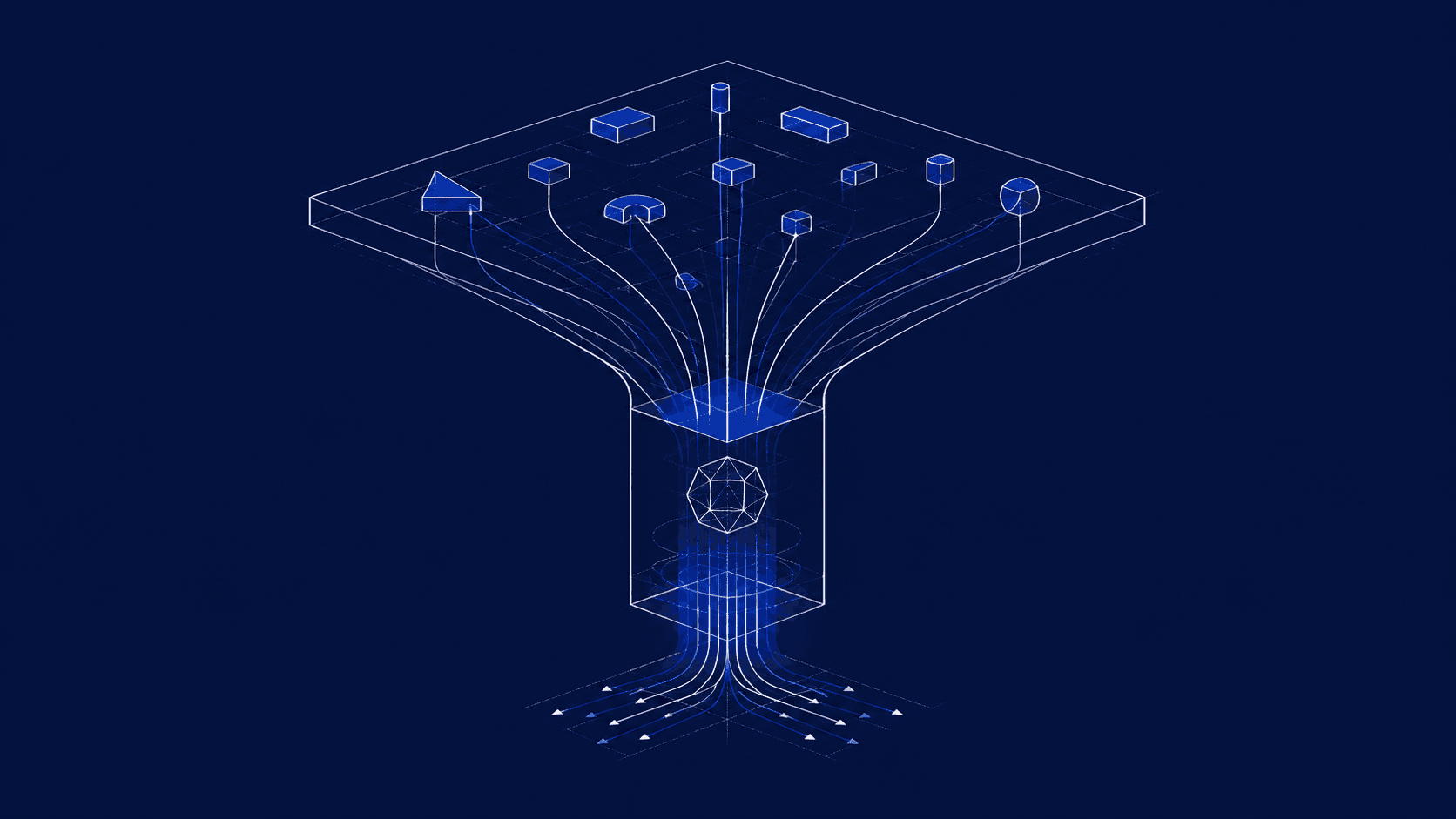
Operations teams routinely spend 40 to 60 percent of their week on manual handoffs: copying data between systems, chasing approvals, and re-keying information that already exists in another tool. Hiring more staff to absorb that load is no longer a practical answer, and generic automation breaks the moment an exception appears.
The real problem is that most teams apply automation to the wrong processes first. A workflow with clear decision rules and structured inputs belongs in a rule-based tool. A workflow with judgment calls, unstructured data, or multi-system coordination belongs with an AI agent. Getting that distinction right is what separates teams that scale from teams that keep hiring.
These seven ai agent use cases are where teams are eliminating manual drag today, in production, not in a pilot.
What Makes a Workflow Worth Handing to an AI Agent
Not every repetitive process needs an agent. Applying sophisticated AI to a problem a simple decision tree handles fine is one of the top ways organizations waste their automation budgets.
The three signals that a process needs an agent, not a script
Three signals indicate a workflow is ready for an agent rather than a script. First, the inputs are unstructured or variable: emails, PDFs, supplier notes, or customer messages that change in format every time. Second, the process requires judgment across multiple systems simultaneously, not just a linear sequence of steps. Third, exceptions are frequent enough that someone is spending real time handling them manually every week.
If all three signals are present, simple workflow automation stops working reliably. That is where agentic AI begins.
Where simple workflow automation stops and agentic AI begins
The difference between generative AI and agentic AI is action. Generative AI produces output. An AI agent takes that output and does something with it: queries a database, routes a document, triggers an approval, or flags a mismatch. The structure of an AI agent includes a reasoning layer, a set of tools it can call, and memory of what it has already done in the current task. That is what makes it capable of handling edge cases instead of breaking on them.
Process characteristic | Use basic RPA or workflow tool | Use an AI agent |
|---|---|---|
Input format | Structured, consistent | Unstructured, variable |
Decision points | Rule-based, deterministic | Requires judgment or context |
System scope | Single system | Multiple systems simultaneously |
Exception frequency | Rare, predictable | Frequent, varied |
Escalation logic | Fixed rules | Context-dependent routing |

AI Agent Use Cases in Finance and Accounts Payable
Finance teams processing hundreds of invoices per week carry a disproportionate manual load. Three-way matching, variance flagging, and month-end reconciliation consume hours that trained staff should not be spending on data entry.
Automated three-way invoice matching without human touch
The ai agent workflow for invoice matching follows a precise sequence. The agent receives the invoice, extracts fields using document parsing, matches the extracted data against the corresponding purchase order and goods receipt record, and calculates any variance. Teams processing 500 or more invoices per week report significant reductions in manual touches once this sequence runs without human input on clean matches.
The agent does not guess when data is ambiguous. It flags the record and moves on, which is a better outcome than a human re-keying the wrong figure.
Exception routing: flagging mismatches and escalating with context
When a variance exceeds a defined threshold, the agent does not just stop. It drafts a context note summarizing the mismatch, attaches the relevant PO line and invoice record, and routes the package to the correct approver. The approver receives everything needed to make a decision in one place, without chasing documents across three inboxes.
This is where ai agent architecture earns its cost. The agent handles the judgment call of what context is relevant, not just the mechanical task of moving files.
Closing the month faster with agent-driven reconciliation checks
At month end, the agent runs reconciliation checks across accounts payable, flagging accounts where invoice totals do not match payment records. It generates a prioritized exception list for the finance team rather than a raw data dump. The team closes faster because they work the list instead of building it.
Supply Chain Monitoring: Agents That Flag Problems Before They Escalate
Supply chain managers spend significant time watching dashboards across fragmented systems and writing exception reports manually. An AI agent replaces that watch work without replacing the manager's judgment on what to do next.
Continuous supplier lead-time monitoring across fragmented data sources
A well-designed agent pulls data from the ERP, the supplier portal, and the logistics API simultaneously. It runs comparisons against expected lead times on a continuous basis, not once per morning when someone opens a spreadsheet. When the agent detects a 12-day deviation on a critical component, it does not wait for the weekly review.
The principle here is that agents must be designed to work across existing systems rather than requiring data to be centralized first. That is what makes this use case practical for most supply chain environments, where tool fragmentation is the default state.
Auto-generating exception reports with recommended actions
When a lead-time deviation crosses a defined threshold, the agent drafts a one-paragraph exception brief. The brief names the supplier, the affected SKU, the magnitude of the deviation, and three suggested responses based on available inventory and alternative supplier data. The supply chain manager receives a decision, not a data dump.
Agentic RAG (Retrieval-Augmented Generation) is the mechanism that makes this possible. The agent retrieves relevant supplier history and inventory context before drafting the brief, so the output reflects actual conditions rather than a generic template.
Handoff to human decision-makers with full context attached
The agent's job ends at the handoff. The manager decides which of the three suggested actions to take. This boundary matters. Agent orchestration works best when the agent owns information gathering and initial reasoning, and humans own consequential decisions. Planning in artificial intelligence is most reliable when the scope of autonomous action is clearly bounded.
Customer Support Triage: Routing and Resolving Without a Queue Backlog
Support queues grow because most tickets go through three unnecessary steps before reaching resolution: assignment, context gathering, and response drafting. An agent handles all three before a human opens the ticket.
Knowledge-based agents that answer policy and account questions instantly
Knowledge-based agents query a structured knowledge base before generating any response. This matters because the alternative, an LLM agent generating answers from training data alone, produces confident but wrong answers on policy specifics. The agent retrieves the exact policy text, confirms it applies to the customer's account type, and drafts the response from that retrieved content.
Knowledge-based agents in artificial intelligence are the appropriate architecture for support environments where accuracy on specific facts is non-negotiable.
When to resolve vs. when to escalate: building reliable handoff logic
One of the most common mistakes in agent deployment is skipping the escalation design. Agents without clear escalation logic loop, guess, or give partial answers on edge cases. The escalation rules should define exactly which ticket types the agent resolves fully, which it routes with a drafted response for human review, and which it escalates immediately with full context.
Artificial intelligence for call centers has validated this architecture at scale. The agent handles volume; the human handles ambiguity above a defined confidence threshold.
AI calling bots for inbound volume spikes
AI calling bots extend the same triage logic to phone channels during volume spikes. The bot handles account lookups, status checks, and common policy questions without a queue. When the call requires judgment, the bot transfers with a real-time context summary so the human agent does not start from zero.
Predflow builds escalation logic into the agent's design from the start of process mapping, not as a configuration added after deployment. That distinction is why escalation rules hold under real conditions rather than breaking on the first unexpected input.
Sales and Marketing Ops: AI Agent Use Cases That Eliminate SDR Grunt Work
SDR teams spend a fraction of their time selling and the rest researching, enriching data, and writing first-touch messages. An ai agent owns the research and enrichment end-to-end, so the SDR focuses on conversations.
AI SDR agents: research, personalize, and sequence without manual input
The workflow runs as follows. The agent pulls prospect data from the CRM, enriches it via a third-party API, scores the account against the ideal customer profile criteria, and drafts a personalized first-touch email. The email is either queued for human review or sent automatically, depending on the confidence score against ICP fit.
The human review checkpoint is a feature of responsible agent design, not a limitation. High-stakes or low-confidence outreach routes to a rep. Routine, high-confidence outreach sends without delay.
Marketing agents for campaign performance monitoring and alerting
Marketing agents monitor campaign performance metrics continuously and send alerts when performance deviates from baseline. The alert includes the metric, the deviation magnitude, and a recommended adjustment. Tools like Optmyzr operate in this category for paid search. The agent does not replace the marketing ops decision; it flags the moment the decision becomes necessary.
Brand-consistent outreach at scale with agent-enforced guardrails
Brand agents enforce tone, terminology, and compliance constraints across every message the ai sdr produces. The guardrails are configured once and applied automatically. Jasper.ai addresses part of this for content generation. A full agent framework extends guardrails to the entire sequence, not just the copy layer.
HR and Onboarding Ops: Agents That Handle the Paperwork Nobody Wants
New hire onboarding involves between 10 and 20 discrete steps across HR, IT, and compliance systems. Without an agent, a coordinator tracks all of them manually. With one, the coordinator manages exceptions.
Automated provisioning sequences triggered by HRIS events
When a new hire record is created in the HRIS, the agent triggers the provisioning sequence automatically. It creates access requests for each system, sends the new hire their credential instructions, and logs completion at each step. No coordinator manually emails IT. No step gets missed because someone was on leave.
Document collection agents with intelligent follow-up logic
The agent sends document requests, tracks responses, and follows up at defined intervals without human intervention. If a document is missing three days before the start date, the agent escalates to HR with the specific gap identified. The follow-up logic is built into the agent workflow, not managed through a coordinator's calendar reminders.
Audit trail and visibility: what human oversight looks like in practice
A well-designed onboarding agent produces a real-time status log that replaces the coordinator's mental model with a readable record. The log reflects all four core characteristics of an AI agent in action: goal-directedness (completing the onboarding checklist), autonomy (running steps without manual triggers), reactivity (adjusting when a document comes in late), and proactivity (escalating before a deadline is missed). Human oversight means reviewing the log, not supervising every step.
Insurance and Financial Services: Agents Built for High-Stakes Document Processing
Document-heavy, regulated environments have historically resisted automation because the cost of an error is high. AI agent architecture addresses this by embedding compliance checkpoints into the process design, not adding them after.
Claims intake agents: extract, validate, and route without human keying
When a claim arrives, the agent extracts all required fields using parsing in NLP, validates them against the policy record, checks for missing or inconsistent data, and routes the claim to the correct handler with a validation summary attached. The agent flags every exception before a human touches the file.
This approach reflects a core principle: identify whether a use case requires actions, knowledge, or both before building anything. Claims intake requires both. The agent needs to retrieve policy context and take routing actions, not just generate text.
Policy document parsing and knowledge base updates
Agentic RAG is the right architecture for policy document processing. It means the agent retrieves relevant sections of the policy document before making any decision, rather than relying on a static model. When a policy is updated, the agent processes the new document, identifies changed clauses, and updates the knowledge base in AI accordingly.
Compliance checkpoints built into the agent workflow, not added after
Compliance steps are mapped during the process design phase, before a single tool is connected. Agents in regulated environments must respect enterprise guardrails from the first interaction. When compliance logic is bolted on after deployment, it breaks on edge cases. When it is mapped as part of the agent's decision structure, it holds.
Frequently Asked Questions
What are the most common ai agent use cases in enterprise operations?
The most common deployments are invoice matching and AP automation, customer support triage, onboarding document management, supply chain exception monitoring, and claims intake in insurance. These share a common profile: high volume, structured inputs with frequent exceptions, and multi-system coordination that creates manual handoff costs.
What is the difference between agentic AI and generative AI?
Generative AI produces content, text, images, or summaries, in response to a prompt. Agentic AI takes action: it queries systems, routes documents, triggers workflows, and handles sequences of steps toward a defined goal. The difference between generative AI and agentic AI is the capacity to act, not just respond.
How do AI agents handle edge cases and exceptions without breaking?
Reliable agents have escalation logic defined before deployment. When the agent encounters an input outside its confidence threshold, it routes the task to a human with full context rather than guessing. Edge case handling is a design decision, not a model capability. Agents without explicit escalation rules loop or produce incorrect outputs.
What is an AI agent platform and how is it different from an automation tool?
An AI agent platform supports agents that make judgment calls across multiple systems, handle unstructured inputs, and manage exceptions. A standard automation tool follows fixed rules on structured data. The distinction matters when inputs vary, decisions require context, or exceptions are frequent enough to need dynamic handling.
How long does it take to deploy an AI agent for a business workflow?
Deployment timelines vary by process complexity and integration scope. Simple, well-documented workflows with clean data can be operational in a few weeks. Complex multi-system workflows with significant exception variety take longer, typically because the process mapping phase, not the technical build, is where most of the time is spent.
Are AI agents safe to use in regulated industries like insurance or finance?
Yes, when compliance checkpoints are built into the agent's design from the start. The critical requirement is that audit trails, validation rules, and escalation logic are mapped during process design rather than configured after launch. Agents that embed compliance into their decision structure perform reliably in regulated environments. Agents where compliance is an afterthought do not.
Conclusion
You now have a clear picture of where agents are eliminating manual work. The next decision is simpler than it looks: identify one workflow where the manual cost is most visible and the inputs are structured enough that an agent can own the task reliably.
Most failed agent deployments start with the wrong process, not the wrong tool. The teams that get this right pick a workflow with clear inputs, frequent volume, and measurable manual cost, then map the process before selecting any technology. That is the lowest-risk entry point, and it is where the ROI becomes visible fastest.
If you have a workflow in mind, Predflow can map it before building anything. Request a process audit, no commitment required.
Bring 20 NetSuite bills to a 30-minute teardown
We will walk your actual invoices through capture, 3-way match and posting on the call, and tell you which steps an agent can take over. No prep beyond the PDFs.
FAQ
Frequently asked questions
What exactly is an AI agent
An AI agent is an autonomous system designed to handle specific business tasks end-to-end. Unlike simple chatbots, AI agents can reason, take actions, integrate with tools, and follow defined workflows.